
Hard Water Stain Removal Guide for Texas Homeowners
DFW's hard water leaves mineral deposits that bond to glass. Here's how the pros remove them — and how you can prevent them.
Hard Water Stain Removal Guide for Texas Homeowners
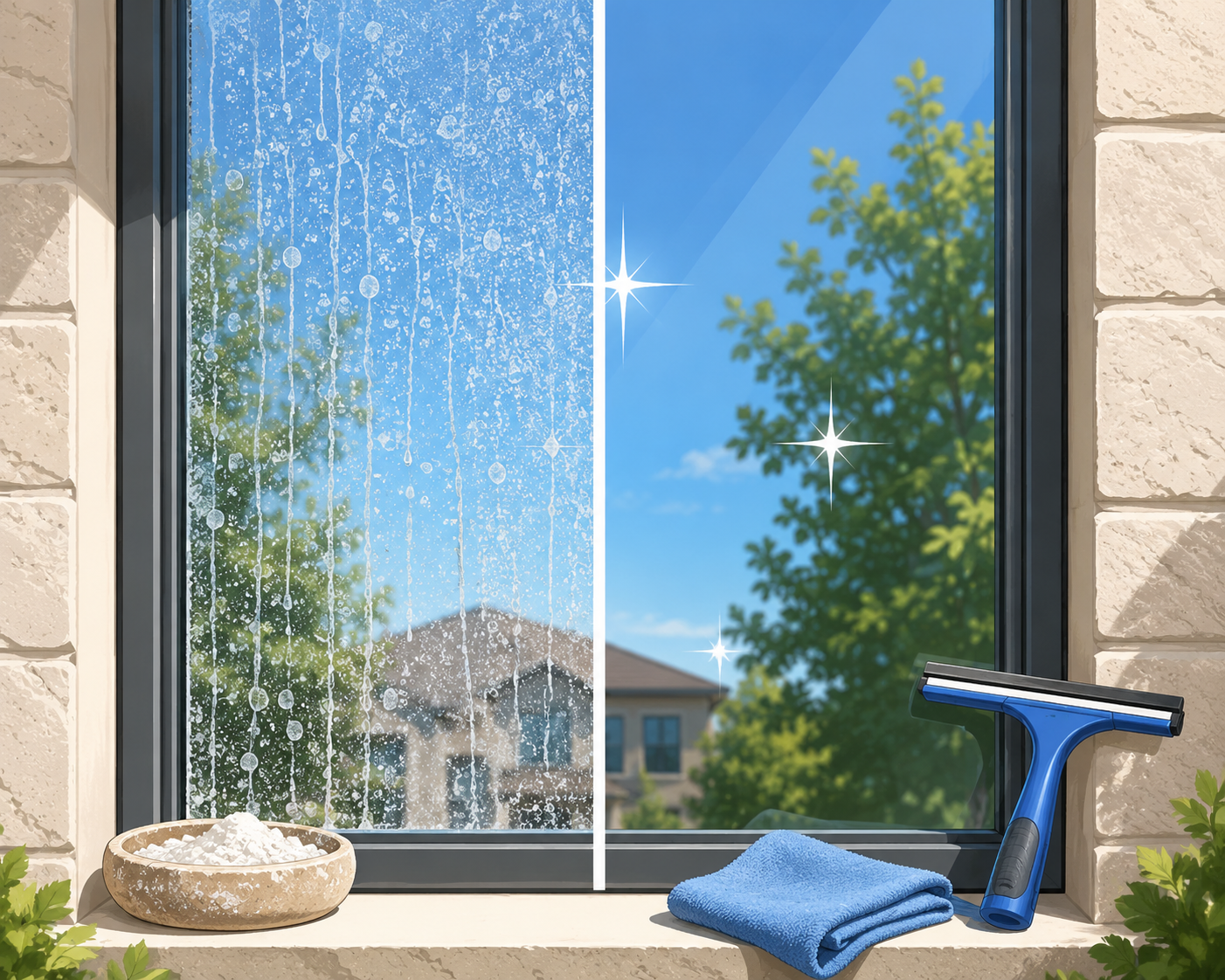
If you've noticed cloudy spots, white residue, or stubborn stains that seem impossible to remove from your windows, you're likely dealing with hard water deposits.
Hard water staining is one of the most common window problems for homeowners throughout the Dallas–Fort Worth area. Unfortunately, many people don't realize the damage is occurring until the spots become severe or even permanent.
The good news is that most hard water stains can be removed if they are caught early. Understanding what causes them, how professionals remove them, and how to prevent them can save homeowners thousands of dollars in future glass replacement costs.
What Causes Hard Water Stains?
Hard water contains naturally occurring minerals, primarily calcium and magnesium.
When water lands on glass and evaporates, these minerals are left behind. Over time, layer after layer of mineral deposits accumulate on the surface of the glass.
In North Texas, the most common sources of hard water staining include:
- Lawn sprinkler systems
- Irrigation overspray
- Rainwater runoff from roofs
- Overflowing gutters
- Pool splash-out
- Outdoor fountains
- Pressure washing without proper rinsing
Because DFW experiences long periods of heat and sunshine, water evaporates quickly. The faster water evaporates, the more concentrated the mineral deposits become.
What begins as a few faint spots can eventually develop into thick, cloudy staining that affects the appearance of the entire window.
Why Hard Water Stains Get Worse Over Time
Many homeowners assume hard water stains are simply sitting on top of the glass.
Initially, that's true.
However, if mineral deposits remain on the glass long enough, they begin to chemically bond to the surface. Over time, the minerals can actually start etching the glass itself.
This is why older hard water stains become increasingly difficult to remove.
The progression typically looks like this:
- Stage 1: Fresh Deposits — Light spotting, easily removable, minimal visual impact
- Stage 2: Mineral Buildup — Visible white spots, cloudy appearance, requires professional treatment
- Stage 3: Surface Bonding — Deposits become difficult to remove, standard cleaners become ineffective, specialized restoration may be needed
- Stage 4: Glass Etching — Permanent damage begins, surface becomes rough, glass replacement may be required
The earlier stains are addressed, the more likely they can be completely removed.
Why DIY Methods Usually Fall Short
A quick internet search will reveal dozens of DIY solutions for hard water stain removal.
Some homeowners try:
- Vinegar
- Baking soda
- Razor blades
- Commercial spray cleaners
- Magic erasers
- Abrasive scrub pads
While some of these methods may help with very light mineral deposits, they rarely solve moderate or severe staining.
In fact, certain DIY approaches can actually make the problem worse.
Using the wrong abrasive material may scratch the glass. Aggressive scraping can damage protective coatings. Certain chemicals can leave additional residue behind.
Modern windows often include specialized coatings such as Low-E glass, which can be damaged by improper cleaning methods.
What appears to be a simple stain can quickly become a costly repair if the wrong products are used.
How Professionals Remove Hard Water Stains
Professional hard water stain removal requires the proper combination of chemistry, technique, and equipment.
At Shine & Bright Exteriors, the process begins with evaluating the severity of the staining.
Inspection
We first determine whether the deposits are surface-level contamination or if permanent etching has already occurred. This helps establish realistic expectations and identify the safest treatment method.
1Mineral Dissolution
A professional-grade mineral dissolver is applied to break down calcium and magnesium deposits. The solution is allowed to dwell for the appropriate amount of time to loosen bonded minerals without damaging the glass.
2Controlled Agitation
The glass is gently scrubbed using glass-safe pads and techniques designed to lift mineral buildup while protecting the window surface.
3Glass Restoration
For more severe staining, specialized polishing compounds may be used to restore clarity and remove stubborn deposits. These products are specifically designed for glass restoration and require proper technique to avoid damage.
4Purified Water Rinse
The window is thoroughly rinsed and cleaned using professional methods, often including purified water systems that leave a spotless finish.
5Final Inspection
The glass is inspected from multiple angles and lighting conditions to ensure the stains have been fully addressed and the window is restored to the best possible condition.
6
How to Prevent Hard Water Stains
Prevention is always easier and less expensive than restoration.
Fortunately, there are several simple steps homeowners can take to reduce hard water staining.
Adjust Sprinkler Heads — One of the biggest causes of staining is irrigation overspray. Walk around your home while your sprinkler system is running and look for water hitting windows directly. Adjusting sprinkler heads can dramatically reduce future buildup.
Keep Gutters Clean — Overflowing gutters often send mineral-rich water cascading down windows during storms. Regular gutter maintenance helps prevent runoff from repeatedly soaking glass.
Schedule Regular Window Cleaning — Professional window cleaning removes developing mineral deposits before they have time to bond to the glass. Most DFW homeowners benefit from cleaning at least twice per year. Homes with heavy sprinkler exposure may benefit from quarterly service.
Consider a Water Softener — Water softening systems reduce the amount of calcium and magnesium throughout your home's water supply. While they won't eliminate every source of staining, they can significantly reduce mineral buildup on windows, shower glass, and fixtures.
Can Every Hard Water Stain Be Removed?
Unfortunately, no.
Once mineral deposits have etched the actual surface of the glass, the damage becomes permanent.
A good rule of thumb is this:
If the stain feels rough when you run your fingernail across it, or if the glass still appears cloudy after professional cleaning, some level of etching may have occurred.
In severe cases, the only complete solution may be glass replacement.
This is why early detection is so important.
Many homeowners wait until stains become highly visible, but by then the damage may already be progressing beneath the surface.
Protect Your Windows Before Permanent Damage Occurs
Hard water stains are one of the most preventable forms of window damage.
Routine maintenance, proper sprinkler placement, and regular professional cleanings can help keep your windows crystal clear for years to come.
If you've noticed white spots, cloudy patches, or mineral buildup on your windows, addressing the issue early gives you the best chance of fully restoring the glass and avoiding costly replacement.
At Shine & Bright Exteriors, we proudly help homeowners throughout Fort Worth, Colleyville, Southlake, Keller, Grapevine, and the surrounding DFW area restore and protect their windows from hard water staining.
Need help with your windows?
Free quotes across Fort Worth and the DFW Metroplex.