
How Dirty Solar Panels Affect Efficiency
Dirty panels lose real money. Here's what the research shows and what to do about it.
How Dirty Solar Panels Affect Efficiency
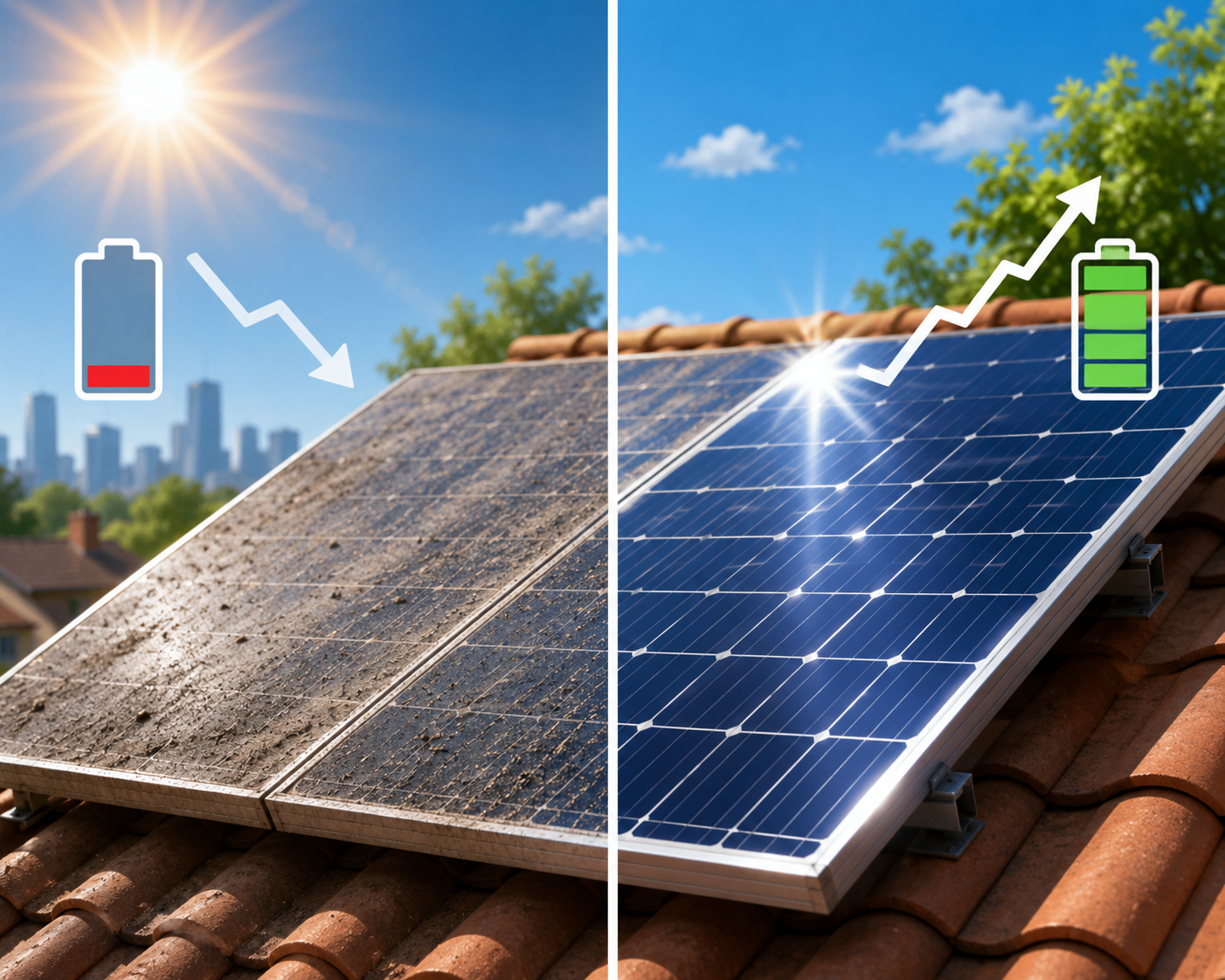
Solar panels are designed to save homeowners money by converting sunlight into electricity. However, many homeowners overlook one simple fact:
Dirty solar panels produce less power.
Over time, dust, pollen, bird droppings, mineral deposits, and environmental debris accumulate on the surface of solar panels. Even a thin layer of buildup can reduce the amount of sunlight reaching the solar cells beneath.
For homeowners throughout the Dallas–Fort Worth area, regular solar panel cleaning is one of the easiest ways to protect energy production and maximize the return on your solar investment.
Why Dirt Reduces Solar Panel Performance
Solar panels work by capturing sunlight and converting it into usable electricity.
Anything that blocks sunlight from reaching the photovoltaic cells reduces the amount of energy the panel can generate.
Common forms of solar panel contamination include:
- Dust
- Dirt
- Pollen
- Bird droppings
- Tree sap
- Leaves
- Air pollution
- Mineral deposits
- Construction debris
When sunlight is blocked, even partially, power production decreases.
Multiple independent studies have found that solar panel soiling can reduce energy production by anywhere from 5% to 25%, depending on environmental conditions and how long the panels remain uncleaned.
For a homeowner who invested thousands of dollars in a solar system, losing even 10% efficiency year after year can represent a significant amount of lost savings.
What Makes DFW Especially Challenging?
North Texas presents several unique challenges for solar panel owners.
Unlike regions that receive frequent rainfall, DFW experiences long periods of dry weather, high pollen counts, strong winds, and airborne dust.
Some of the most common causes of solar panel buildup in the area include:
Pollen — Oak, cedar, pecan, ash, and other trees release large amounts of pollen throughout the year. During peak pollen season, panels can develop a noticeable yellow-green film that blocks sunlight and reduces efficiency.
Dust and Wind — North Texas is known for windy conditions and occasional dust storms. Fine dust particles settle on solar panels and gradually create a layer that limits sunlight transmission.
Bird Activity — Bird droppings are one of the most damaging contaminants for solar panels. Unlike dust, bird droppings create concentrated shaded areas that can dramatically reduce output from individual cells. In some cases, these shaded areas can create what are known as "hot spots," where portions of the panel operate at higher temperatures than intended. Over time, repeated hot spot formation can contribute to premature panel degradation.
Construction and Development — Many DFW neighborhoods continue to experience rapid growth and development. Construction dust can travel significant distances and settle on nearby rooftops, accelerating solar panel contamination.
Can Rain Clean Solar Panels?
This is one of the most common misconceptions among solar homeowners.
While rain can rinse away loose dust and debris, it rarely provides a complete cleaning.
Rainwater typically does not remove:
- Hardened bird droppings
- Mineral deposits
- Tree sap
- Pollen residue
- Bonded dirt
- Sticky contaminants
Additionally, when rainwater evaporates, it can leave behind minerals and residue that continue to accumulate over time.
Many homeowners are surprised to learn that panels can appear clean from the ground while still having a substantial layer of contamination affecting performance.
Signs Your Solar Panels Need Cleaning
Many homeowners don't realize their panels are dirty until production has already declined.
Some common warning signs include:
- Visible dust buildup
- Bird droppings on panels
- Reduced monthly energy production
- Increased utility bills
- Pollen accumulation
- Uneven panel appearance
- Water spots or mineral staining
If your solar production appears lower than expected compared to previous months under similar weather conditions, panel contamination may be contributing to the loss.
Why DIY Solar Panel Cleaning Can Be Risky
Many homeowners consider cleaning solar panels themselves to save money.
Unfortunately, improper cleaning can create additional problems.
Tap Water Leaves Spots — Most North Texas water supplies contain minerals that can leave spots and residue on solar panels. Using a standard garden hose often leaves behind deposits that continue reducing light transmission.
Pressure Washers Can Cause Damage — High-pressure water can damage panel seals, wiring components, protective coatings, and mounting hardware. Some manufacturers specifically discourage pressure washing because of the risk involved.
Safety Concerns — Most residential solar systems are installed on sloped roofs. Climbing onto a roof without proper training and safety equipment significantly increases the risk of injury. Falls remain one of the leading causes of serious home maintenance accidents.
Warranty Concerns — Certain cleaning methods may void portions of manufacturer warranties if improper tools or chemicals are used. Always review your solar panel manufacturer's recommendations before attempting DIY cleaning.
How Professional Solar Panel Cleaning Works
Professional solar panel cleaning focuses on maximizing cleanliness while protecting the system.
At Shine & Bright Exteriors, we use methods specifically designed for solar panel surfaces.
The process typically includes:
Inspection — We inspect panels for visible buildup, bird droppings, mineral staining, and other contaminants.
Deionized Water Cleaning — Purified deionized water contains virtually no minerals, allowing panels to dry spot-free. Unlike tap water, purified water leaves no residue behind.
Soft-Bristle Agitation — Specialized brushes safely loosen dirt and contamination without scratching the glass surface.
Spot-Free Rinse — Panels are thoroughly rinsed to remove all remaining contaminants and cleaning residue.
Final Inspection — We verify that panels are clean, clear, and free from visible buildup.
The result is maximum sunlight exposure and optimal panel appearance.
How Often Should Solar Panels Be Cleaned?
The ideal cleaning schedule depends on your environment.
For most homeowners in the Dallas–Fort Worth area:
Twice per year — Recommended for most residential systems, helps maintain strong production, prevents long-term buildup.
Quarterly Cleaning — Ideal for homes near busy roads, beneficial for properties with significant bird activity, recommended for heavily wooded lots, helpful near construction zones or agricultural areas.
In many cases, your monthly solar production data can provide clues about when cleaning is needed.
If output is steadily declining despite similar weather conditions, contamination may be affecting performance.
Protect Your Solar Investment
Solar panels represent a significant investment in your home's future.
Like any investment, they perform best when properly maintained.
Regular cleaning helps:
- Maximize energy production
- Improve efficiency
- Protect long-term performance
- Reduce contamination buildup
- Improve appearance
- Extend system lifespan
For homeowners throughout Fort Worth, Colleyville, Southlake, Keller, Grapevine, and the surrounding DFW area, professional solar panel cleaning is a simple way to ensure your system continues operating at its full potential.
At Shine & Bright Exteriors, we use purified water and solar-safe cleaning methods to help homeowners protect their investment and keep their panels producing at peak efficiency year-round.
Need help with your windows?
Free quotes across Fort Worth and the DFW Metroplex.